
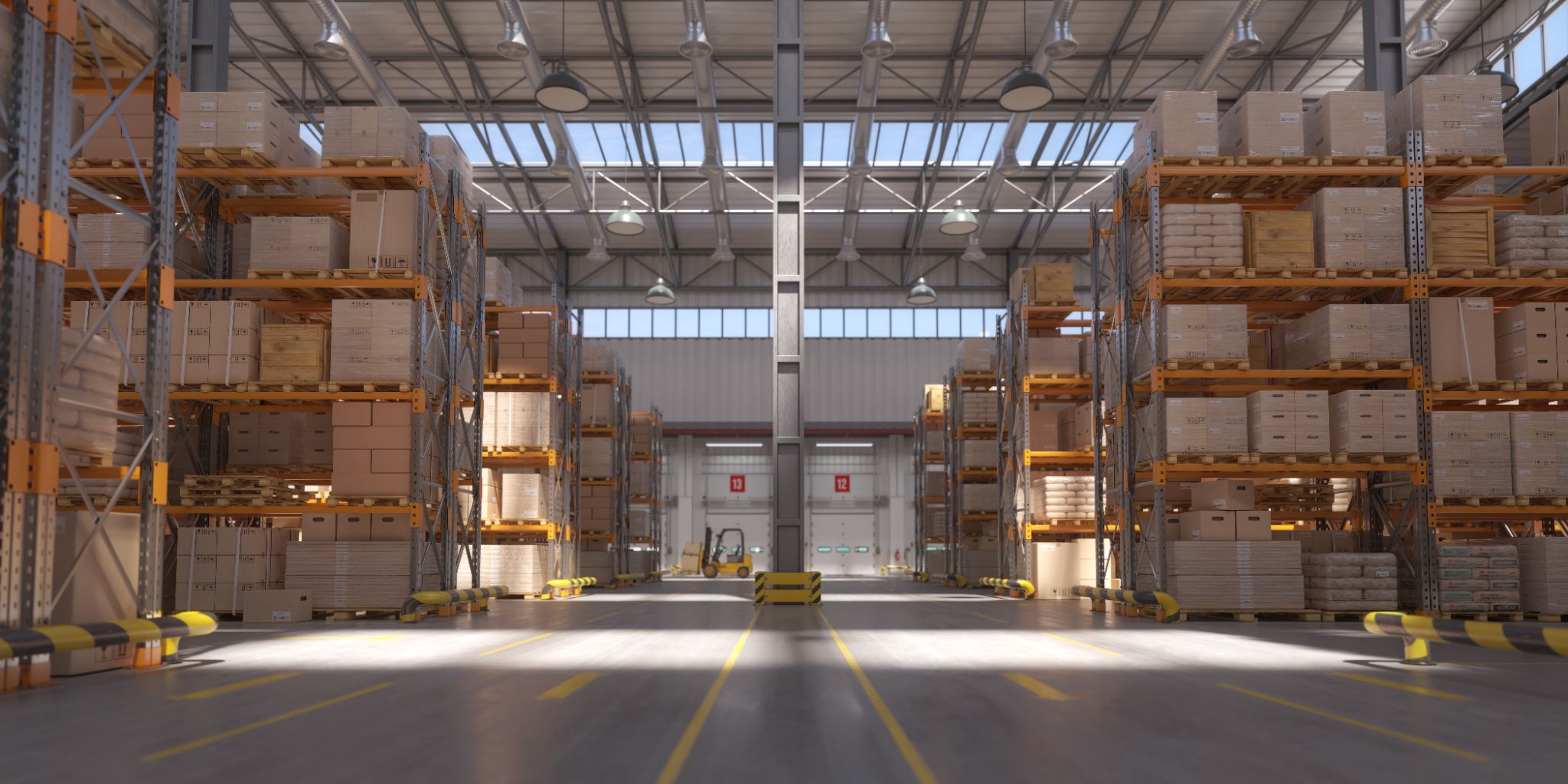
Warehouses today face three core challenges: limited space, rising demand for speed, and the need for accurate inventory control. Goods move in and out constantly, and without a clear storage system, space runs out quickly while errors become more likely.
Pallet racking helps bring order and a structured way to store palletised goods, making better use of space and supporting daily operations.
In this article, you’ll learn what a pallet racking system is, how it works, the main types available, and why it plays a key role in warehouse efficiency.
Need a pallet racking system for your business? Reach out to Sim Solutions Singapore via phone or our online contact form for any enquiries!
What Is a Pallet Racking System?
A pallet racking system is a storage structure used in warehouses to hold goods on pallets in organised rows and levels. It is designed to store items vertically so space is used more efficiently instead of spreading stock across the floor.
In simple terms, a pallet is a flat platform used to stack, store, and move goods with a forklift or pallet jack. A racking system refers to the framework of frames and beams that holds these pallets in place within a warehouse.
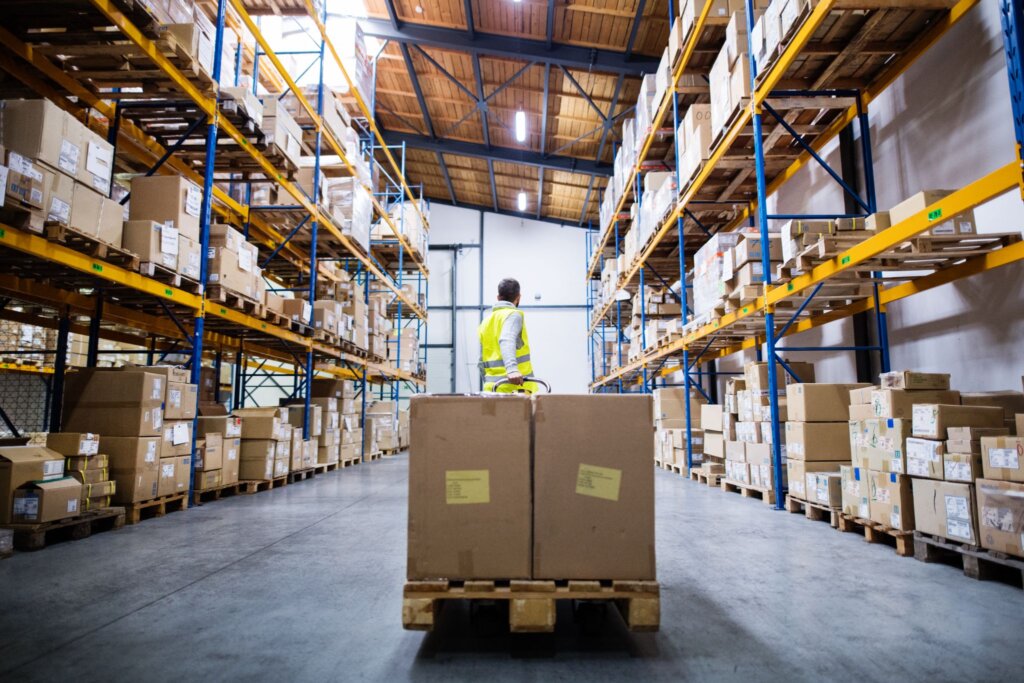
In operation, forklifts place pallets onto the racks and retrieve them when needed. Each pallet is assigned a fixed position, which helps keep stock organised and easy to track.
Types of Pallet Racking Systems
There is no single type of pallet racking system that fits every warehouse. The right setup depends on how goods are stored, how often they move, and how much space is available. You’ll usually come across these main types in warehouses:
1. Selective Pallet Racking
Selective pallet racking is the most widely used system in warehouses. It allows direct access to every pallet without needing to move other stock. This makes it simple to load, retrieve, and manage inventory at any time.
It is typically used in warehouses that store a wide mix of products with different sizes, SKUs, or movement rates. Because every pallet is accessible, it supports fast picking and flexible stock rotation.
The main advantage is accessibility. The trade-off is that it requires more aisle space compared to high-density systems.
2. Drive-In / Drive-Through Racking
This system is designed for high-density storage where space is prioritised over direct access. Forklifts enter the racking lanes to place or retrieve pallets, which reduces the need for multiple aisles and increases storage capacity.
It is commonly used for bulk storage of similar products with low SKU variation. The difference between the two systems is how access works:
- Drive-in racking has one entry and exit point, meaning pallets are stored and retrieved from the same side
- Drive-through racking allows access from both ends, which improves flow but still maintains high storage density
Because pallets are stored deep inside the structure, it is less suitable for fast-moving or highly varied inventory.
3. Push-Back Racking
Push-back racking stores pallets on a series of nested carts placed on slightly inclined rails. When a new pallet is loaded, it pushes the existing pallet back by one position. When unloading, pallets naturally roll forward for retrieval.
This system operates on a LIFO (last-in, first-out) principle, meaning the most recently stored pallet is retrieved first. It is often used in operations that want to balance storage density with better access compared to drive-in systems. It also reduces forklift travel within the rack.
4.Pallet Flow (Gravity Flow) Racking
Pallet flow racking uses gravity and roller tracks to move pallets from the loading side to the picking side. Pallets are loaded at one end and automatically move forward along rollers to the front for picking. As one pallet is removed, the next one moves into place.
This system follows a FIFO (first-in, first-out) flow, which makes it suitable for goods that have expiry dates or require strict rotation. It is commonly used in food storage, pharmaceuticals, and other time-sensitive inventory environments where stock freshness matters.
5. Cantilever Racking
Cantilever racking is built for storing long, bulky, or irregular-shaped items that do not fit on standard pallets. Instead of beams across the front, it uses arms extending from vertical columns, creating open storage space without front obstructions.
This makes it easier to load and unload items such as timber, pipes, steel bars, and furniture components. It is commonly used in building material yards and manufacturing warehouses where item length varies significantly.
6. Mobile Pallet Racking
Mobile pallet racking systems are installed on motorised or manually operated bases that move along floor tracks. Instead of fixed aisles, the system creates temporary access lanes only when needed. This allows the same floor space to hold more pallets compared to conventional static racking.
It is used in warehouses where storage density is critical and access frequency is lower or controlled. While it increases storage capacity, it also requires careful planning for safety, maintenance, and load distribution.
Why Are Pallet Racking Systems Important in Warehbouses?
A pallet racking system is not just about storing goods. It directly affects how efficiently a warehouse runs, how safely people work, and how well inventory is controlled. The layout of racking often determines how fast orders are processed and how much space is truly usable.
1. Maximises Storage Space
Most warehouses are limited more by floor area than by height. Pallet racking solves this by using vertical space, allowing goods to be stored in stacked levels instead of spreading across the floor.
This approach significantly increases storage capacity without requiring warehouse expansion. It also allows businesses to store more stock during peak demand periods without changing their physical site.
In addition, well-designed racking layouts can reduce wasted space caused by poor stacking or irregular storage.
2. Improves Organisation and Stock Control
Without a structured system, inventory can quickly become difficult to manage, especially when Stock Keeping Unit (SKU) numbers increase. Pallet racking helps solve this by assigning fixed, identifiable locations for each pallet within the warehouse.
This structure makes it easier to organise stock by product type, batch, or turnover rate. As a result, inventory can be tracked more accurately, and warehouse teams can locate items faster without relying on guesswork.
It also reduces common issues such as misplaced goods or duplicate storage entries, which often occur in less organised storage setups.
3. Enhances Operational Efficiency
Warehouse efficiency depends on how quickly goods can move through the system. Pallet racking supports this by giving forklifts clear access to storage locations, which reduces unnecessary travel between picking points and speeds up loading and unloading.
When the racking layout is planned well, it also helps keep aisles clear and reduces congestion during peak activity. This allows work to continue without frequent delays or disruption.
Over time, these improvements support faster order fulfilment and more consistent use of labour across daily operations.
4. Increases Workplace Safety
Safety is a key function of any pallet racking system. By storing goods in defined, stable positions, it reduces risks linked to floor stacking, blocked walkways, and unstable loads.
Each racking system is designed with specific load limits, which helps ensure the structure performs safely when it is used correctly.
However, safety depends on how the system is used day to day. Proper forklift handling, regular inspections, and staying within load ratings all play a role in keeping the system safe.
When these practices are followed, the warehouse becomes more controlled and easier to manage.
5. Supports Inventory Management Systems
Modern warehouse operations often rely on digital tools such as Warehouse Management Systems (WMS), barcode scanning, and RFID tracking. These systems depend on accurate physical storage structures to work properly.
Pallet racking provides that structure by assigning fixed, clearly defined locations for each pallet. Each rack position can be linked to digital records, allowing it to represent a specific product, batch, or order status.
With this link between physical storage and digital data, inventory becomes easier to track in real time.
It improves visibility across the supply chain, reduces the need for manual checking, and also supports better stock rotation, especially in setups that use FIFO methods or batch-controlled inventory.
6. Reduces Long-Term Operational Costs
While pallet racking requires upfront investment, it often leads to long-term cost savings. By using space more efficiently, warehouses can store more goods within the same footprint, reducing the need to rent or build additional storage facilities.
That structured layout also improves organisation, which means stock is less likely to be misplaced or damaged during handling. When items are easier to locate and retrieve, teams spend less time searching and moving around the warehouse.
Over time, these small gains in space use, accuracy, and speed add up. The result is lower operating costs and more consistent day-to-day performance.
How to Choose the Right Pallet Racking System
Choosing a pallet racking system is about matching the setup to how your warehouse actually operates, not just filling available space.
1. Assess your warehouse space and dimensions
Start with the physical structure of your space. Ceiling height affects how much vertical storage you can use, while floor space determines how wide your aisles can be.
Aisle width then influences forklift movement and what type of racking system can be installed safely. These factors work together, so it helps to view them as one system rather than separate details.
2. Match the racking system to your product type
The type of goods you store will influence the kind of racking you need. Heavy items require stronger load support and more robust beam structures. Long, bulky, or irregular goods need open designs that can accommodate their shape without restriction.
If your stock has expiry dates or batch control, you will need a system that makes it easy to rotate inventory and access older items first.
3. Choose a system that supports your inventory flow (FIFO or LIFO)
How your inventory flows in and out of the warehouse will affect your choice of system:
- FIFO (first-in, first-out) is important for perishable or time-sensitive goods, where older stock must be picked first
- LIFO (last-in, first-out) works better for non-perishable goods where rotation order is less strict
The racking system should support this natural flow instead of forcing workarounds.
4. Plan for future warehouse growth and changes
It is easy to design a system based on current inventory levels, but warehouses often grow or change over time.
Ask yourself whether the system will still work if stock volume increases, product types expand, or order frequency changes. A flexible setup reduces the need for costly reconfiguration later.
5. Consult a racking specialist for layout planning
Even if you have a clear idea, it helps to speak with a racking supplier or warehouse planner. They can translate your requirements into a layout that balances space, safety, and workflow. This can prevent design mistakes that are difficult to fix after installation.
Safety Considerations and Maintenance
Pallet racking systems are built for heavy use, but they still need proper handling and regular upkeep to stay safe and reliable. Most issues in warehouses come from wear, impact, or incorrect use rather than the system itself.
1. Carry out regular inspections
Racking should be checked on a routine basis for signs of damage such as bent frames, loose beams, or worn connections. Even small impacts from forklifts can weaken parts of the structure over time, so early detection helps prevent bigger problems later.
2. Follow load limits at all times
Every racking system is designed with a specific weight capacity. Staying within these limits is essential to prevent structural stress or collapse. It is also important to ensure loads are evenly distributed across beams rather than concentrated in one area.
3. Train staff on safe handling practices
Forklift operators and warehouse staff should understand how to work around racking systems safely. This includes correct pallet placement, careful manoeuvring in aisles, and avoiding contact with upright frames during loading and unloading.
4. Maintain clear warehouse layouts
Aisles should remain free from obstructions to allow safe movement of forklifts and personnel. Clear marking and organised storage help reduce the risk of collisions or blocked access routes.
5. Repair or replace damaged components quickly
If any part of the racking system is damaged, it should be repaired or replaced immediately rather than left in use. Even minor structural issues can affect overall stability if ignored.
Conclusion
A pallet racking system forms the backbone of how a warehouse organises space, manages stock, and keeps daily operations running.
When it is designed well, it increases storage capacity, improves inventory accuracy, and supports safer, more efficient workflows. It also helps reduce wasted space, speeds up picking, and makes stock easier to track and manage throughout the warehouse.
Looking for a place to store your goods using a pallet racking system? Reach out to Sim Solutions Singapore via phone or our online contact form for any enquiries!