
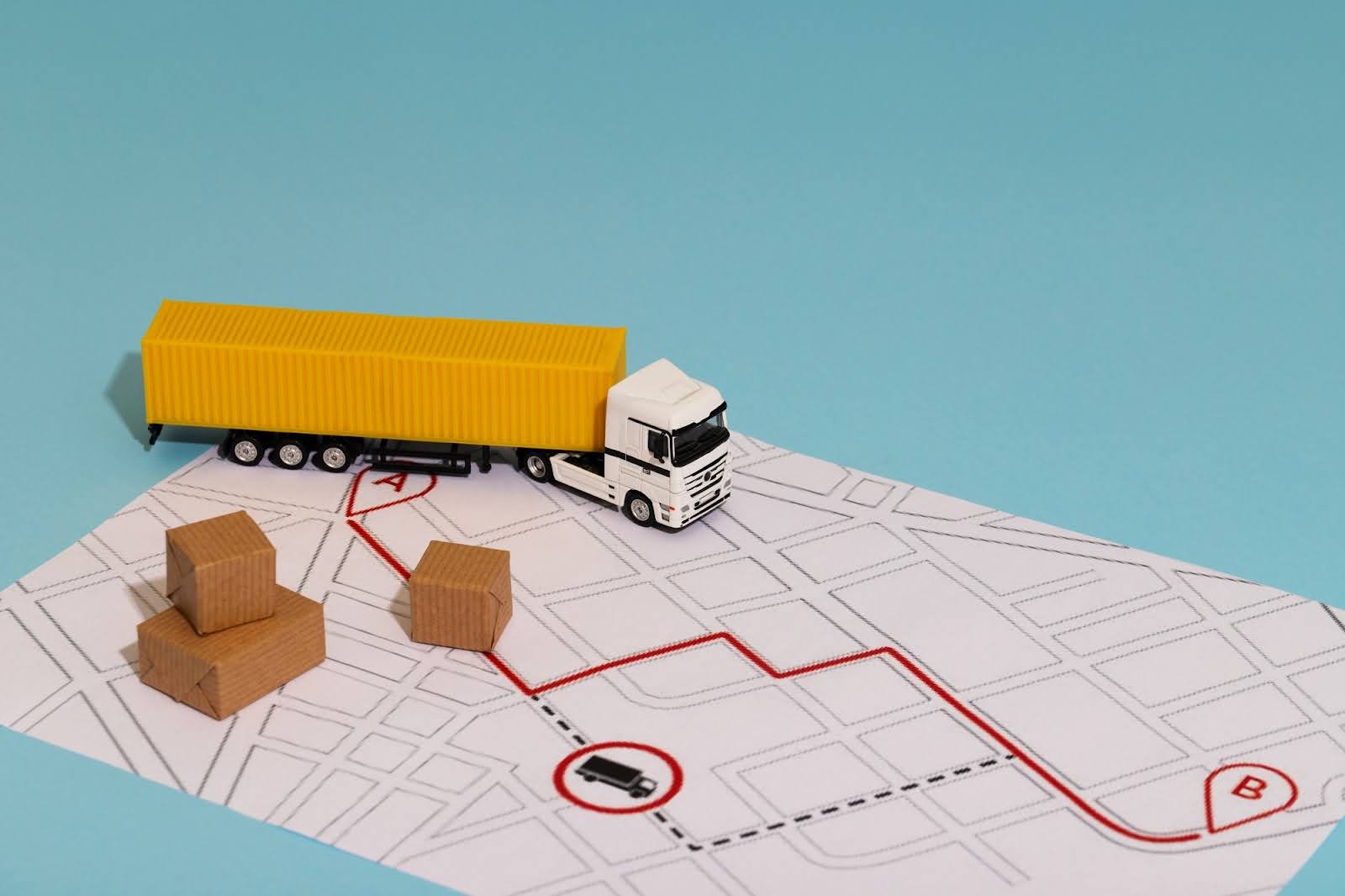
From Paper Logs to Predictive Power
Every business that moves goods knows the feeling. A shipment has left the warehouse, but where is it exactly? Is it stuck in traffic? Will it arrive on time? For every minute a shipment is unaccounted for, you’re losing money and risking customer trust. That where real time tracking in logistics come to play.
Logistics has come a long way. We’ve moved from drivers using paper maps and making check-in calls to a world of instant, satellite-powered data.
This guide will show you why real-time tracking in logistics is no longer just a nice feature to have – it’s the core engine for building a modern, efficient, and customer-focused operation.
What is Real-Time Tracking?
In simple terms, real-time tracking is the ability to see the location and status of your vehicles and goods as it happens. It’s a continuous, live flow of data from your assets on the road back to your central office, allowing you to make smart decisions immediately.
This is made possible by a few key technologies working together:
GPS & Telematics
Think of the GPS in your car, but far more advanced. It tracks a lorry’s precise location, speed, fuel usage, and even driver behaviour like harsh braking.
RFID & IoT (Internet of Things)
These are the smart sensors. RFID tags act like super-smart barcodes for tracking pallets in a warehouse. IoT sensors can monitor the condition of the cargo itself – its temperature, humidity, or whether it has been dropped.
This is a world away from older methods. Here’s a quick comparison:
| Feature | Old Batch Processing | Modern Real-Time Tracking |
| Data Speed | Slow, updated every few hours or once a day | Instant, updated every few seconds |
| Visibility | You see where something was | You see where something is right now |
| Problem Solving | Reactive (you find out about a delay after it happens) | Proactive (you can see a delay coming and act) |

Core Benefits of Real-Time Tracking
Adopting this technology isn’t just about having dots on a map, it’s about seeing a real return on your investment (ROI).
1. Slash Operational Costs & Maximise Efficiency
- Route Optimisation : Optimize routes dynamically to cut fuel consumption by up to 20%.
- Eliminate Waste: Eliminate waste by reducing driver idle time and unauthorized vehicle use.
- Prevent Costly Breakdowns: Prevent costly breakdowns with predictive, data-driven maintenance alerts.
2. Build an Unbreakable, Transparent Supply Chain
- Enhance Cargo Security: If a lorry leaves a designated area or a container door is opened unexpectedly, you get an instant alert.
- Create a Single Source of Truth: Everyone in your organisation from the warehouse manager to the sales team can see the same live information.
3. Create a World-Class Customer Experience
- Eliminate “Where Is My Order?” Calls: Instead of your customers calling you for an update, you can send them a link to a live tracking map.
- Build Trust with Proactive Updates: Build trust with proactive delay notifications and consistently accurate ETAs.
- Use Digital Proof of Delivery: Your driver can capture a signature or a photo of the delivered item on their phone. This is sent back to you instantly, ending any disputes about whether a delivery was completed.
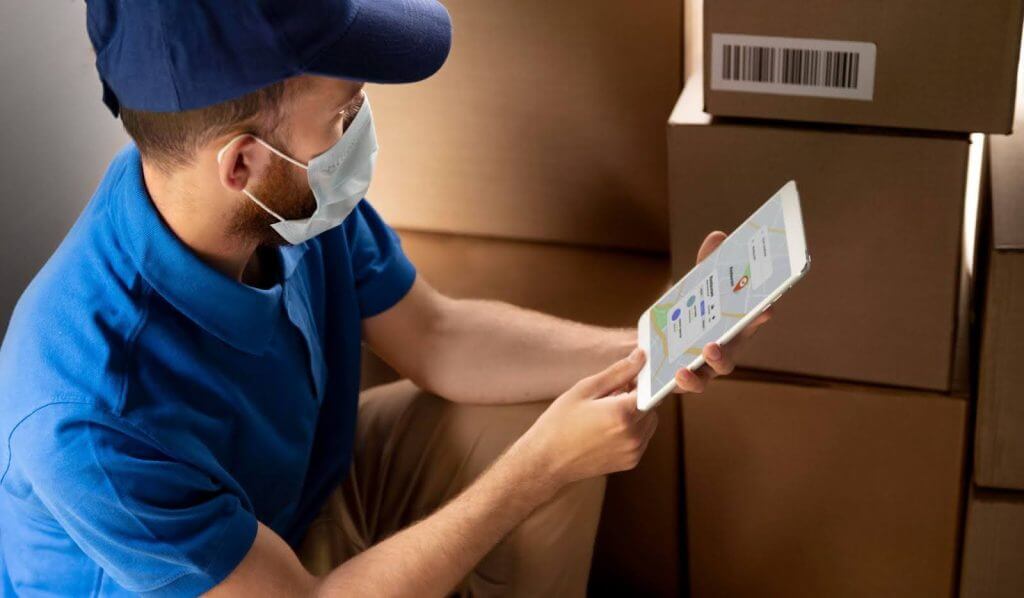
Real-Time Tracking in Action: Applications Across the Industry
This isn’t just theory. Industry leaders are using this technology to win.
Warehouse
Instead of staff spending hours looking for a specific pallet, an RFID scan can locate it in seconds.
Real-time data also helps manage the flow of lorries, telling them which loading bay is free to minimise waiting times.
Long-Haul Transit
Companies like DHL use real-time data to ensure their lorries are running efficiently and complying with driver hour regulations.
For temperature-sensitive goods (like food or medicine), sensors provide a constant data log to prove the ‘cold chain’ was never broken.
Last-Mile Delivery
This is the final, most crucial step. Amazon has trained customers to expect to see exactly how many stops away their driver is.
Real-time tracking is the only way to provide this “pizza tracker” experience.
Manufacturing (JIT)
For ‘Just-in-Time’ manufacturing, parts need to arrive at the factory at the exact moment they’re needed.
Real-time tracking makes this possible, reducing the need for expensive warehouse storage.
Best Practices for a Successful Implementation
Convinced? Getting started is more straightforward than you might think if you follow a few key steps.
1. Selecting the Right Technology Partner
Don’t just choose the cheapest option. Look for a partner who understands the logistics industry.
Ask them about their experience, how their system will integrate with your existing software (like your warehouse management system), and what kind of support they offer.
2. Driving User Adoption and Training Your Team
The best technology in the world is useless if your staff don’t use it. Invest in a proper training programme for your dispatchers, managers, and drivers.
Show them how the new system makes their jobs easier, not harder.
3. Ensuring Data Security & Regulatory Compliance
Real-time tracking generates a lot of data, which needs to be protected. Ensure your technology partner has strong security measures, like data encryption.
If you operate across borders, you also need to be mindful of data privacy laws like GDPR.
The Future is Predictive: What’s Next?
The story doesn’t end here. The future of tracking is about moving from reacting to problems to predicting them.
From Reactive to Predictive
Imagine a world where Artificial Intelligence (AI) analyses your routes, the weather forecast, and live traffic to warn you of a potential delay hours in advance.
The Rise of IoT
Soon, we’ll have even more detailed insights from smart sensors monitoring everything from the air pressure around a fragile item to whether a package has been tilted.
Total Supply Chain Automation
In the future, a system might not just detect a problem (like a lorry breaking down) but also automatically trigger the solution (like dispatching a replacement vehicle and notifying all affected customers).

Conclusion: Stop Guessing, Start Winning
In today’s fast-paced world, uncertainty is your biggest enemy. Real-time tracking is the antidote. It provides the visibility, efficiency, and customer-focused approach you need to not just survive, but thrive.
Investing in real-time tracking logistics is a direct investment in your bottom line, your brand’s reputation, and your company’s future. It’s time to stop guessing and start taking control.
Gain a competitive edge with a transparent logistics partner. Sim Solutions uses advanced real-time tracking to give you complete control and peace of mind. Contact us at +65 6280 3309.
Frequently Asked Questions (FAQ)
1. What’s the main difference between GPS and RFID tracking in a warehouse?
GPS is best for tracking vehicles over long distances using satellites. RFID is best for short-range tracking inside a building, like a warehouse. It uses radio waves to identify and track tags attached to individual pallets or items.
2. How much does a real-time tracking system typically cost?
Costs vary depending on the number of vehicles or assets you need to track and the complexity of the system. Most providers now offer a monthly subscription fee per vehicle, which includes the hardware, software, and support.
3. How quickly can we expect to see a return on our investment?
Many businesses see a return within the first 6-12 months. The savings on fuel, reduced overtime, and improved productivity often quickly outweigh the initial cost.
4. How does real-time tracking help with insurance and compliance?
It provides an indisputable digital record of a vehicle’s journey, speed, and stops. This can be vital for settling insurance claims. It also helps prove compliance with regulations like driver working hours or maintaining temperature controls for sensitive goods.